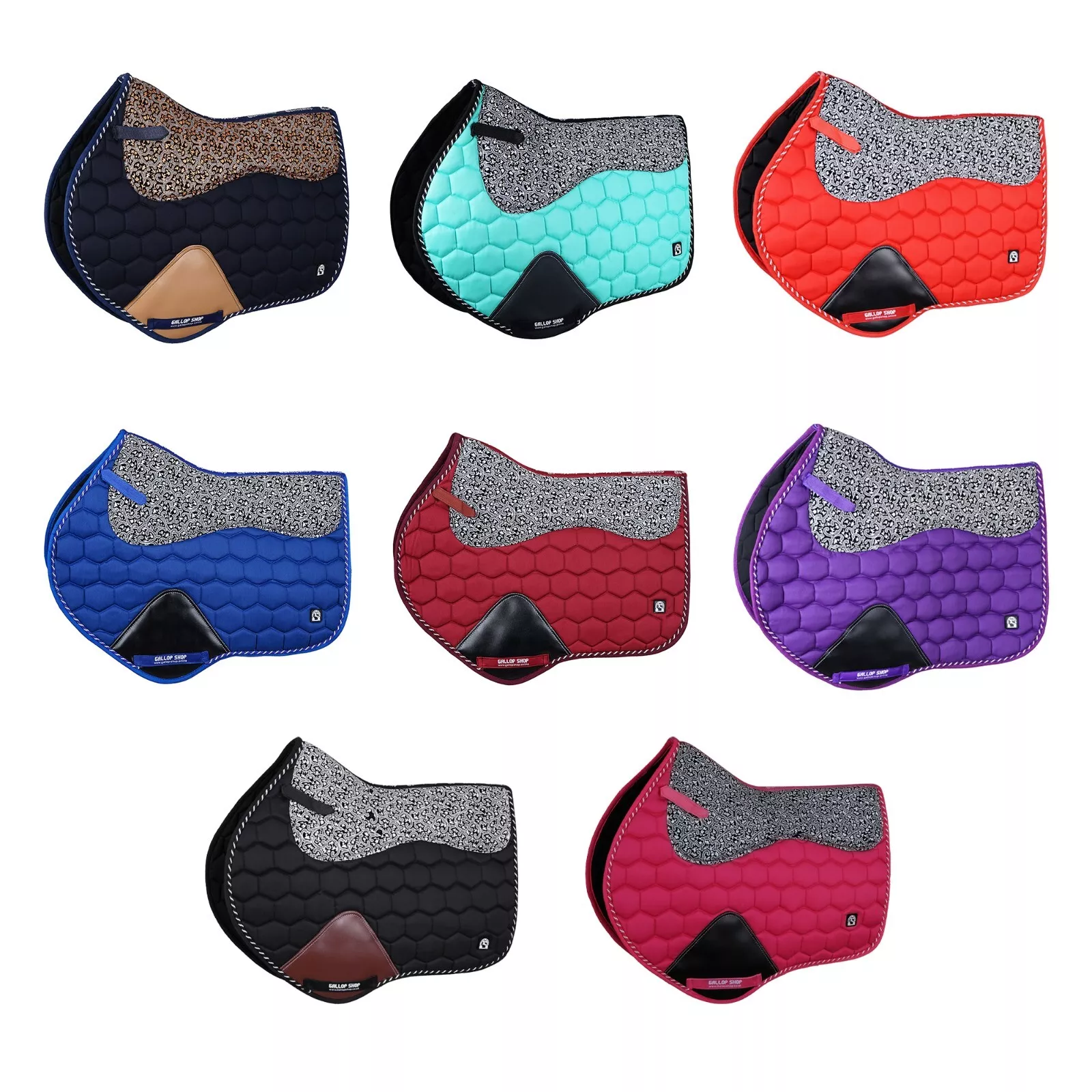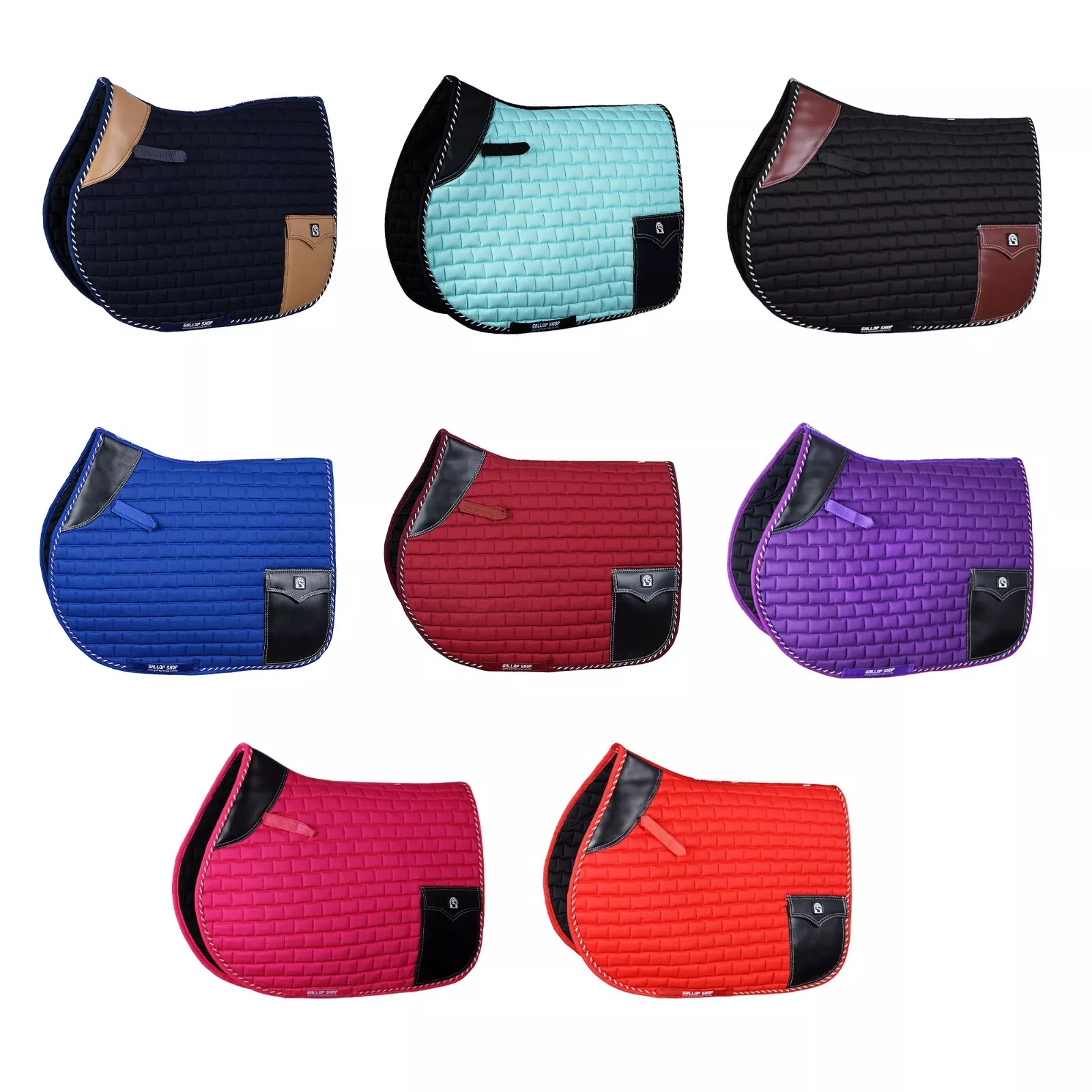

While both styles serve to protect the horse’s back and absorb moisture, dressage and show jumping saddle pads are engineered around fundamentally different saddle tree geometries and rider biomechanics.
1. Geometry & Flap Contours
The most visually distinct difference lies in the cut of the pad flaps:
- Dressage Saddle Pads: Feature an extended, vertical drop designed to match the long, straight flaps of a dressage saddle. The flap length typically measures 55cm to 60cm vertically.
- Jumping Saddle Pads: Feature a forward-cut curve to accommodate the shorter, forward-angled flaps required when the rider shortens their stirrup leathers for jumping position.
2. Padding & Impact Distribution
Jumping saddles subject the equine back to concentrated concussive impacts during takeoff and landing. Consequently, jumping pads often integrate firmer, high-density shock-absorbing foam cores. Dressage pads prioritize supple flexibility, breathability, and subtle tactile communication between the rider’s seat and the horse’s back.
3. Girth Strap & D-Ring Attachment Loops
Because dressage saddles utilize long billets and short girths buckled near the horse’s belly, dressage pads feature shortened hook-and-loop D-ring fastening tabs. Jumping pads use longer attachment loops suited to traditional short billets buckled beneath the saddle flap.
4. Manufacturing Excellence at Gallopshop PK
Gallopshop PK manufactures both dressage and jumping pads with identical premium build standards: reinforced spine mesh channels, anti-slip silicone logos, satin or cotton twill outer shells, and bespoke color-matched piping.